Would You Spend $40M Just to Cut Costs in Half?

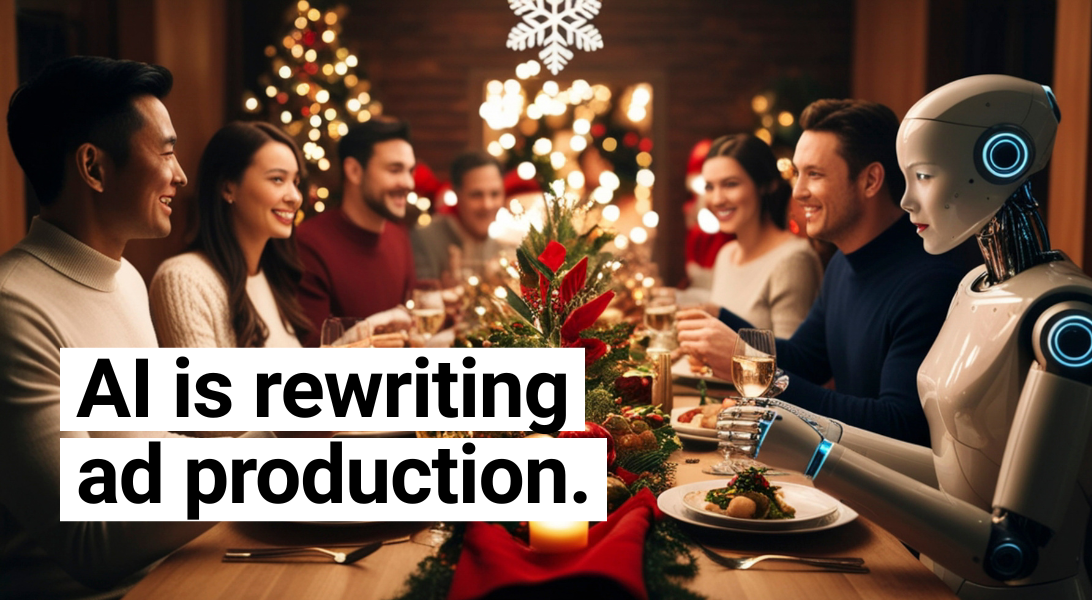
Generative AI is no longer a side experiment for consumer brands — it’s becoming an infrastructure shift. And few examples make this clearer than Mondelez.
According to senior leadership, the snacking giant has now invested over $40 million in a proprietary AI video tool designed to halve production costs and dramatically speed up content development.
The company expects AI-generated TV ads to appear during the 2026 holiday season, with potential placement in the 2027 Super Bowl. For an industry built on emotion, storytelling, and brand heritage, this marks a major turning point.
So what exactly is Mondelez doing — and what should marketers learn from it?
What Mondelez Is Building
Mondelez’s global SVP of Consumer Experience, Jon Halvorson, revealed several concrete developments:
- The company has invested $40M+ in an AI video-generation system.
- The tool can reduce production costs by 50% compared to traditional methods.
- AI-generated TV ads are expected to air by late 2026, scaling to high-stakes stages like the Super Bowl by 2027.
- Mondelez is already using the system to create social content for:
- Chips Ahoy (US)
- Milka (Germany)
- Oreo (global e-commerce product pages in November — Amazon & Walmart)
Instead of using AI to generate human faces — something that backfired for Coca-Cola’s 2024 holiday ads — Mondelez is avoiding “AI humans” entirely. Instead, they are sticking to product-driven creativity such as chocolate textures, motion, backgrounds, and animation.
An example: an 8-second Milka spot that shows chocolate waves folding over a wafer, with personalized backgrounds depending on the viewer.
Why Mondelez Is Doing This Now
The motivation isn’t secret:
CPG margins are squeezed.
- Tariffs are rising.
- Shopper budgets are tightening.
- Agencies are expensive.
- Product development cycles are too slow.
AI gives them leverage on all four.
If this system can later create more complex scenes, savings could multiply — not just reduce agency fees but redesign the full pipeline of creative production, sampling, A/B testing, and e-commerce asset creation.
Not Everyone Has Succeeded: The Industry Reality Check
Mondelez isn’t alone:
Kraft Heinz and Coca-Cola have also been experimenting heavily with AI.
But results vary:
- Coca-Cola’s AI-generated Christmas ads were criticized as “soulless” and “creepy”.
- Consumer backlash showed a key truth: AI alone doesn’t guarantee good creative.
- AI-generated humans, especially, are still a high-risk move for brand image.
Mondelez’s strategy seems intentionally cautious:
Use AI for texture, motion, product cues, packaging, and adaptations — not for emotional storytelling or human characters.
Safeguards: AI Doesn’t Run Wild
Tina Vaswani, VP of Digital Enablement & Data, emphasized that human approval remains mandatory.
Mondelez outlined internal rules banning:
- Highlighting unhealthy behaviors
- Overconsumption
- Vaping
- Emotionally manipulative claims
- Offensive stereotypes
In other words: AI can generate — but humans curate.
Why Marketers Should Pay Close Attention
This isn’t just a Mondelez story.
It’s a signal of where brand-side marketing is heading.
Here are the biggest implications:
1. The Economics of Creative Are About to Change
A brand spending tens of millions annually on global content can suddenly cut that by half.
For agencies, this is a direct warning:
Production-heavy models will be disrupted first.
For in-house teams, it opens new flexibility:
rapid concepts, more variations, modular assets, real-time localization.
2. AI Will Reshape Speed to Market
CPG brands traditionally take months to move from idea → creative → production → launch.
AI cuts that to days.
This changes how often brands can test, adapt, and evolve campaigns.
3. E-Commerce Content Will Become Fully Automated
Oreo’s use of the tool to redesign product pages on Amazon & Walmart is a glimpse into the future:
dynamic visuals, motion elements, and personalized product pages at scale.
For e-commerce-first brands, this is a major leap.
4. Creative Differentiation Will Matter More — Not Less
As more brands adopt AI, the ones who win won’t be the ones who “use AI,”
but the ones who use it well.
Poorly executed AI (e.g., Coke’s backlash) becomes a liability.
Smart execution becomes an advantage.
5. Human Insight Isn’t Replaceable
Mondelez’s strict review process shows the industry understands:
AI can enhance creativity, but can’t replace human judgment.
Emotion, cultural nuance, brand tone — these still require people.
Final Thought for Marketers
Mondelez isn’t experimenting.
They’re restructuring.
And when a global player invests $40M into a single creative technology, it’s not about hype — it’s a roadmap.
Generative AI will not eliminate marketers or agencies,
but it will eliminate slow processes, expensive production cycles, and content bottlenecks.
The next two years will define a new era:
brands that adapt will scale faster — brands that don’t will spend more and deliver less.