The Hidden Science Behind High-Converting Promotions

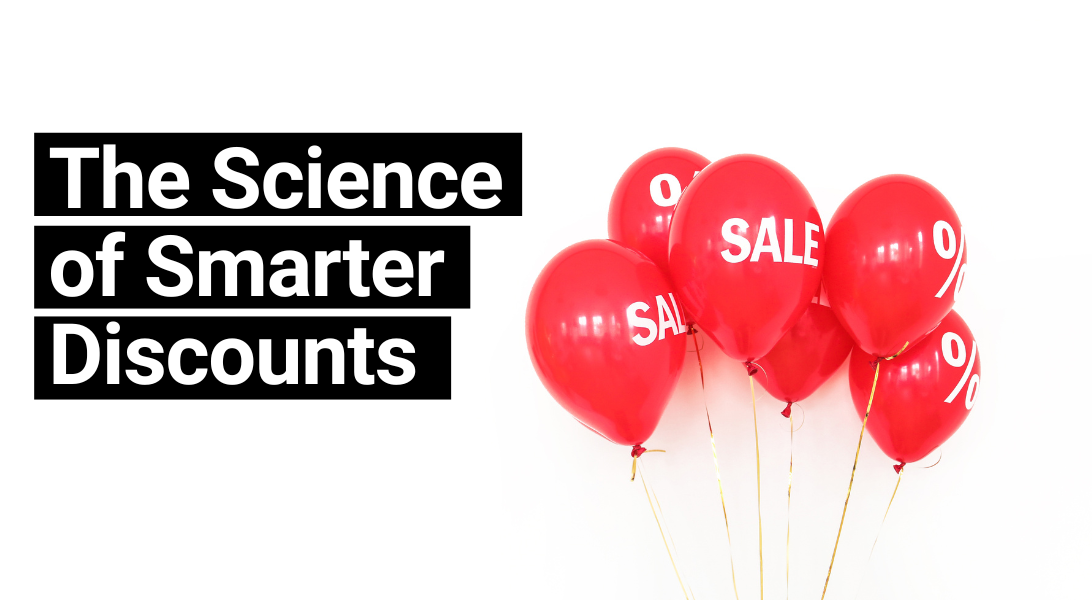
Acuity Pricing has released “The Hidden Mind,” a new report created with behavioural scientist Richard Shotton. The research brings together 10 years of studies across Canada, China, Mexico, the U.S. and the U.K., highlighting how subtle psychological cues can significantly increase the effectiveness of promotions.
The core idea is simple:
Consumers don’t evaluate promotions rationally — they respond to behavioural signals.
And as Shotton notes, tiny adjustments in framing, wording or design can make a promotion far more persuasive without increasing cost.
Below are the ten behavioural principles marketers can use to set and communicate promotions more effectively.
How to Set Promotions More Effectively
1. Uncertain Rewards
Consumers are more motivated by variable rewards than fixed ones.
Offering 100% off for 10% of customers generates more excitement than 10% off for everyone, even though the financial cost is identical. Variability creates emotional lift.
2. Purchase Limit Scarcity
A “limit per customer” restriction can actually drive higher purchase volume.
When brands cap purchases — for example, a maximum of three items — customers assume the deal is unusually good or may sell out. Setting the cap higher than the usual purchase quantity increases effectiveness.
3. The Pique Effect
Unusual numbers break consumer autopilot.
Instead of predictable discounts ending in 0 or 5, surprising values grab attention:
• 8% off to mark 8 years in business
• 21% off during 21:00–21:59
Novelty increases noticeability and recall.
4. Illusion of Control
People value things more when they believe they chose them.
Providing two or three reward options boosts perceived value—even if one option is rarely selected. The presence of choice itself is the psychological trigger.
5. Short Deadlines
Short, specific deadlines spur immediate action.
They close the intention–action gap and lift conversion. Long deadlines dilute urgency and lower responsiveness.
6. The Bottom-Dollar Effect
Consumers dislike spending “the last of their money.”
They become more price-sensitive at the end of a pay period.
Running promotions before payday increases receptiveness and reduces friction.
How to Communicate Promotions More Persuasively
7. The Rule of 100
The way a discount is framed changes how big it feels.
• For items under USD 100 → express savings as a percentage
• For items over USD 100 → express savings as a currency amount
This aligns with consumers’ perception of value and maximizes appeal.
8. Magnitude Congruence
Font size influences perceived cost.
If a sale price appears in a larger font, consumers assume it’s more expensive.
To make the discount feel better:
• Display the sale price in a smaller font
• Keep the original price slightly larger
This subtle shift increases perceived value without altering the offer.
9. Storytelling
Stories make discounts feel credible and meaningful.
When a promotion has a backstory, consumers trust the offer more and perceive higher value. Effective narratives include:
• Offering the same discount staff receive
• Anniversary-driven promotions
• Clearing seasonal inventory
• Manager’s curated favourites
A compelling story transforms a discount into a reason — and reasons drive action.
10. The Danger of “Free”
People assume that “free” items are low value.
This weakens the impact of free samples or gifts unless brands clarify quality.
To counter the effect:
• Emphasise that the free item is high quality, or
• Clearly state its recommended retail price, e.g., “Free gift worth USD 25.”
What This Means for Marketers
Behavioural science shows that the effectiveness of a promotion isn’t defined by its size, but by how it’s framed, timed and communicated.
For marketers, the lessons are clear:
• Not all discounts are created equal — the psychology matters more than the math.
• Small changes in wording, font, number selection or deadline can produce disproportionate improvements.
• Story-driven, well-framed promotions outperform purely numerical offers.
• Promos designed with behavioural cues convert better without increasing cost.
Promotions work best when they meet human expectations, biases and motivations — not when they rely solely on rational calculations.