Does Gender Change Your LinkedIn Reach?

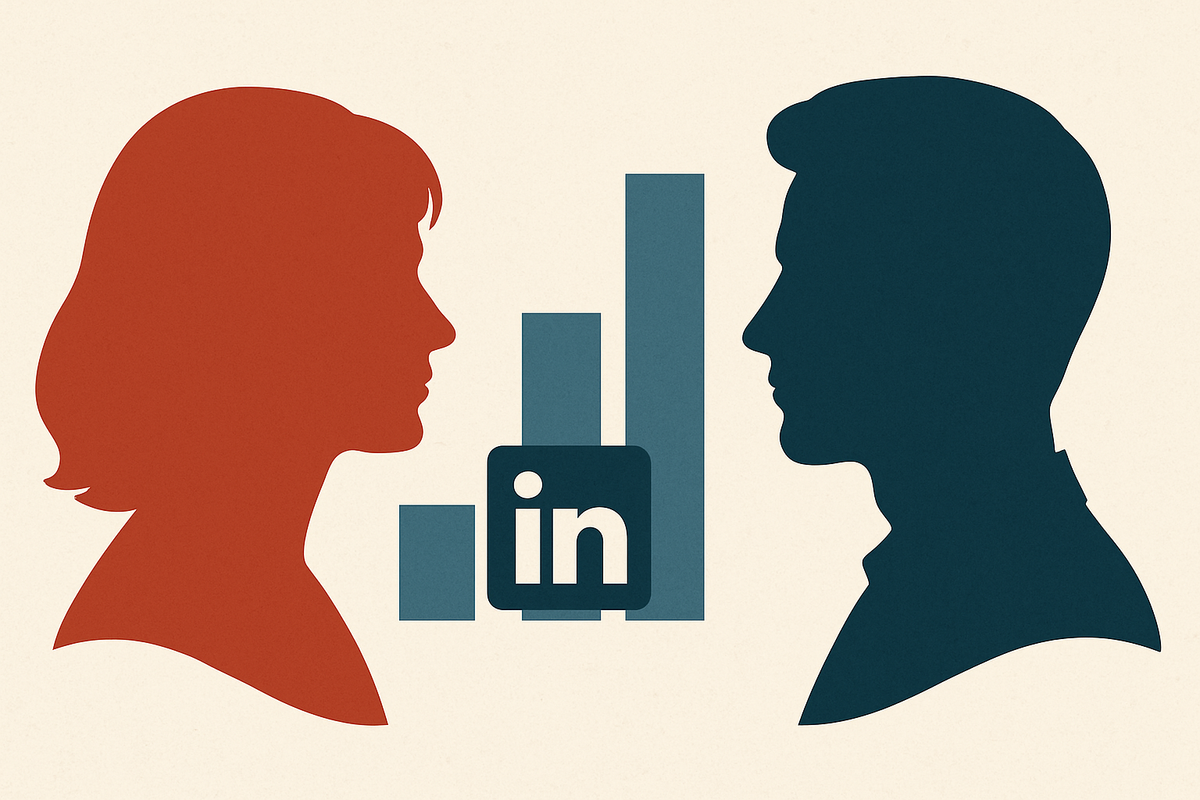
The LinkedIn feed has been filled with a surprising wave of user-run “experiments”: women changing their profile photos and names to male personas, then posting the exact same content to compare performance.
And in several cases, the results looked dramatic — some reported up to 700% more impressions when posting under a male identity.
This sparked a bigger question across the platform:
Is LinkedIn’s algorithm unintentionally favoring male profiles?
LinkedIn has now addressed the controversy directly. According to Sakshi Jain from LinkedIn’s team, gender is not part of the ranking model. But the situation isn’t that simple — and for marketers, there are important lessons buried under this debate.
What LinkedIn Says: Gender Isn’t a Ranking Signal
In LinkedIn’s official explanation, the company makes a clear statement:
- The algorithm does not use gender, age, race, or any demographic data to determine what gets pushed into the feed.
- Their internal checks on several of these user experiments showed differences in engagement, but not driven by gender-based logic.
- The platform has experienced a significant increase in daily content creation, which naturally intensifies competition for visibility.
So according to LinkedIn, any difference in reach must come from other variables — not gender.
Then Why Are Users Seeing Higher Reach With Male Profiles?
LinkedIn admits that determining the exact reason behind reach fluctuations is complicated. Jain points to a long list of influencing factors:
- Posting time
- Feed density and competition at that moment
- Who happens to be active and sees the post first
- Interaction velocity in the first minutes
- Network composition
- Topic relevance
In other words: Side-by-side posts are not truly identical conditions.
Even if the content is the same, the environment never is.
The Bigger Marketing Insight: Algorithms Don’t Operate in a Vacuum
Whether or not gender impacts distribution indirectly (through user behavior, subconscious biases in engagement, or network structure), one thing is clear for marketers:
Human behavior influences algorithms as much as algorithms influence reach.
Even without demographic targeting in the algorithm, the audience might engage differently depending on the perceived identity of the poster — and the algorithm simply amplifies engagement patterns.
This is a crucial reminder for brands and creators:
- Visibility is shaped by how people interact, not just how platforms rank content.
- Subtle behavioral biases can cascade into major differences in performance.
- The first few interactions still remain the most powerful predictor of reach.
So… Is LinkedIn Biased? Or Is the Audience?
LinkedIn says there’s no gender-based coding in the system.
Users say their real-life tests tell a different story.
The truth likely sits somewhere in between:
Algorithms may be neutral — but audiences rarely are.
For marketers, that means gender-neutral distribution isn't the same as gender-neutral engagement. And understanding audience psychology remains just as important as understanding platform mechanics.
Final Takeaway for Marketers
The controversy highlights a larger message:
Don’t rely on a single variable to evaluate performance.
A viral post, an underperforming update, or an unexpected spike in impressions is almost never caused by just one factor.
As content volume rises and competition increases, marketers must:
- Test posting times
- Tailor formats for the feed
- Activate early engagement
- Build diverse networks
- Analyse content-type performance rather than identity-based assumptions
There’s no gender switch that unlocks reach — but there are smarter strategies that do.